
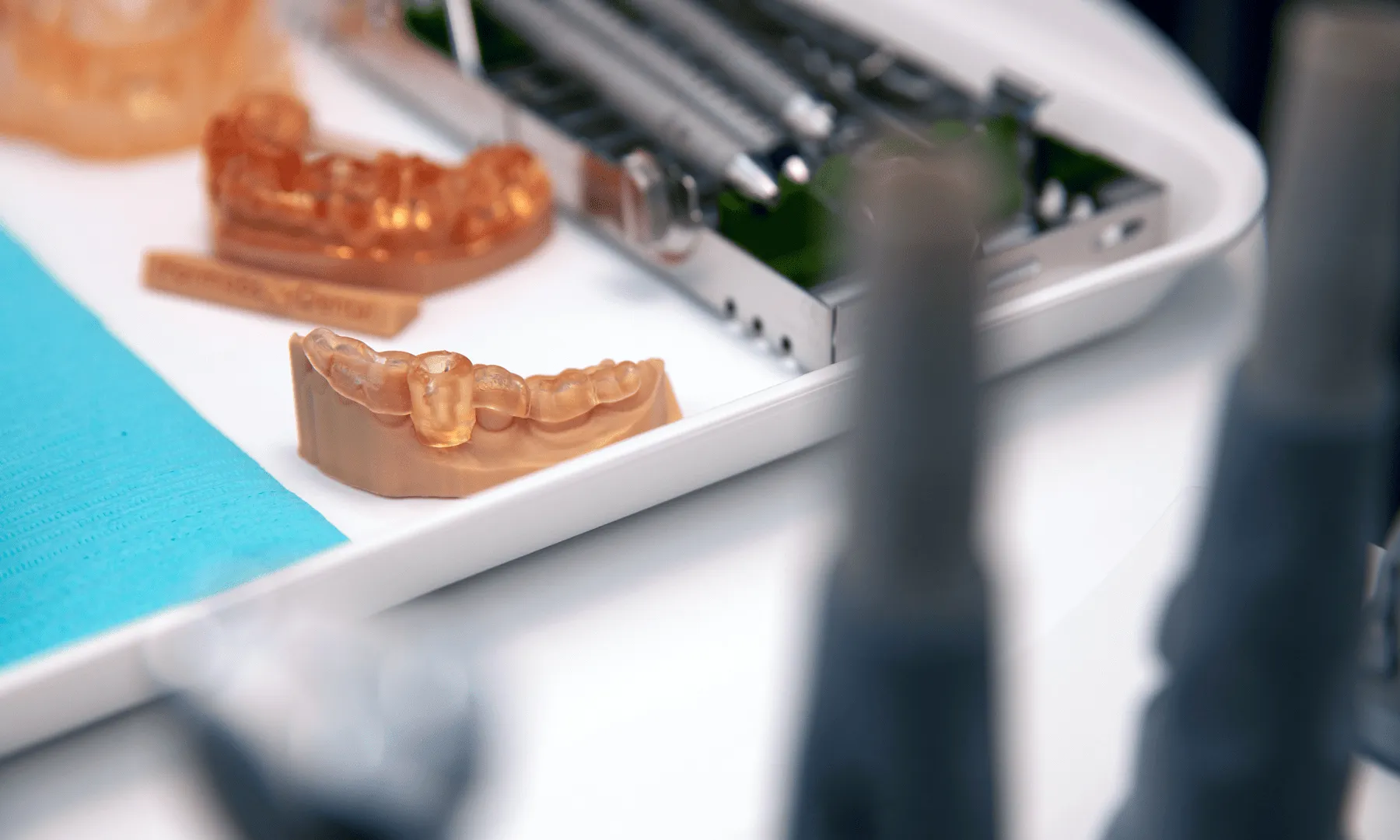
Surgical guide laboratory for dental implants
Digital guided surgery for implant dentistry clinics
We design and 3D print dental surgical guides for implants. Send us the CBCT and the intraoral scan as STL or PLY; we plan each implant position and make the guide in our own lab, ready for guided surgery.
Want to try our protocol? Start today.


98% of our cases arrive by intraoral scanner, from more than 150 practices that already trust Smileep®
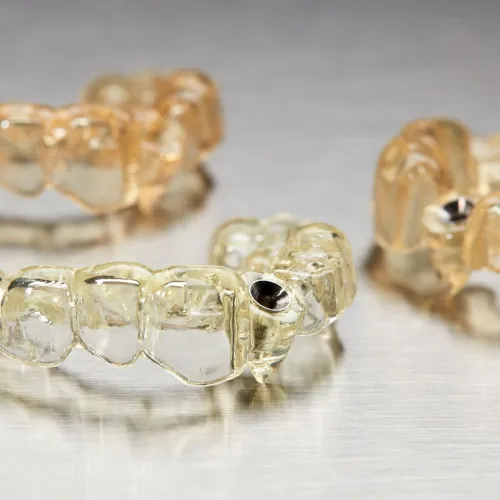
Compatible with All Major Implant Brands
Our 3D surgical guides are compatible with the most widely used implant systems: Nobel Biocare, Straumann, Dentsply Sirona, Zimmer Biomet, MIS, Klockner and many more. Planning is performed on the patient's CBCT to guarantee the exact position, angulation and depth of each implant.
How we manufacture your Surgical Guide
From scanner to operating room

Intraoral Scan + CBCT
Send us the patient's intraoral scan and CBCT. We overlay both for surgical planning.
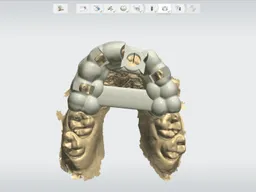
CAD Design
We plan the implant positions in 3D and design the custom surgical guide for your case.
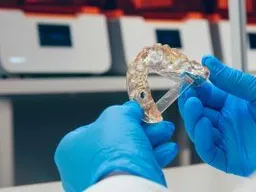
3D Printing
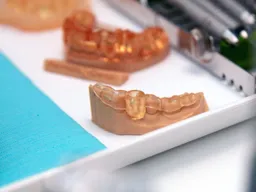
We manufacture the surgical guide using a Formlabs 3D printer with surgical-grade biocompatible resin.
Shipment to practice
The surgical guide arrives at your practice ready for surgery.
Clinical Applications
Planning and guide fabrication for simple and complex cases
Single implant
Precision in localised cases
- Planning over CBCT and intraoral scan
- Control of angulation, depth and emergence
- 3D-printed surgical guide
Multiple implants
More predictability in rehabilitations
- Coordinated design for several implants
- Compatible with major implant brands
- Reduces surgical improvisation in the practice
Immediate loading
Surgery and provisional planned together
- Digital workflow to coordinate guide and provisional prosthetics
- Better communication between practice and lab
- Ideal for cases requiring high predictability
What clinics say about Smileep®
Trusted by professionals who work with us every day
“The material quality is excellent — the splint is completely transparent and fits perfectly from the very first fitting, with no adjustments needed.”
“I am delighted with the product. I love the presentation, how well they fit, and how little they change colour over time.”
“The quality of the work is excellent, and most importantly, communication with the laboratory is clear and responsive.”
“The implant-supported prosthetics fit perfectly, with such precise fit and occlusion that they barely require any adjustment. It is reassuring to work with professionals like this.”
FAQs about Guided Surgery
Everything you need to know before your first digital surgical guide
What is a 3D surgical guide?
A 3D surgical guide is a device printed in biocompatible resin that is placed on the patient's gums during implant surgery. It has calibrated holes that guide the exact position, angulation and depth of the drill and implant, following the prior digital plan.
What advantages does guided surgery have over freehand surgery?
Guided surgery significantly reduces the margin of error in implant placement, allows flapless surgery in many cases (less trauma), facilitates immediate loading and reduces operating time. The patient also recovers more quickly.
Why is prior digital planning important?
Digital planning on CBCT allows 3D visualisation of the patient's anatomy (bone, nerves, anatomical structures), design of the ideal implant positions, and anticipation of possible complications before entering the operating room. It is the critical step that makes guided surgery possible.
What advantages does a complete digital implant workflow offer?
The integrated digital workflow (scan + planning + guide + provisional prosthetics) allows moving from surgery to a provisional prosthetic on the same day (immediate loading), minimising the number of appointments and improving the patient experience.
Is guided surgery possible for patients with special requirements?
Yes. Guided surgery is especially useful for patients with limited bone space, proximity to nerves or maxillary sinuses, need for immediate loading, or when planning complex rehabilitations with multiple implants. Digital planning allows anticipating and resolving these cases with greater safety.
What do I need to send for a surgical guide?
The patient's CBCT and the intraoral scan as STL or PLY (iTero, Medit, 3Shape TRIOS, Carestream, Planmeca and others). State the implant system you will use on the order. If you are not scanning yet, physical models are also accepted.
Where is the guide made?
In our own laboratory, on Formlabs 3D printers.
Can you also make the prosthesis for the same case?
Yes. With the same digital workflow we make the hybrid prosthesis and the implant crowns and bridges for the case, as well as the surgical guide.
Start with Guided Surgery Today
Send us your first case and experience the precision of a digital workflow.