
How to send your first surgical guide case to the lab
Protocol for sending your first guided-surgery case: CBCT, intraoral scan, implant system, planning approval and the drilling protocol report.
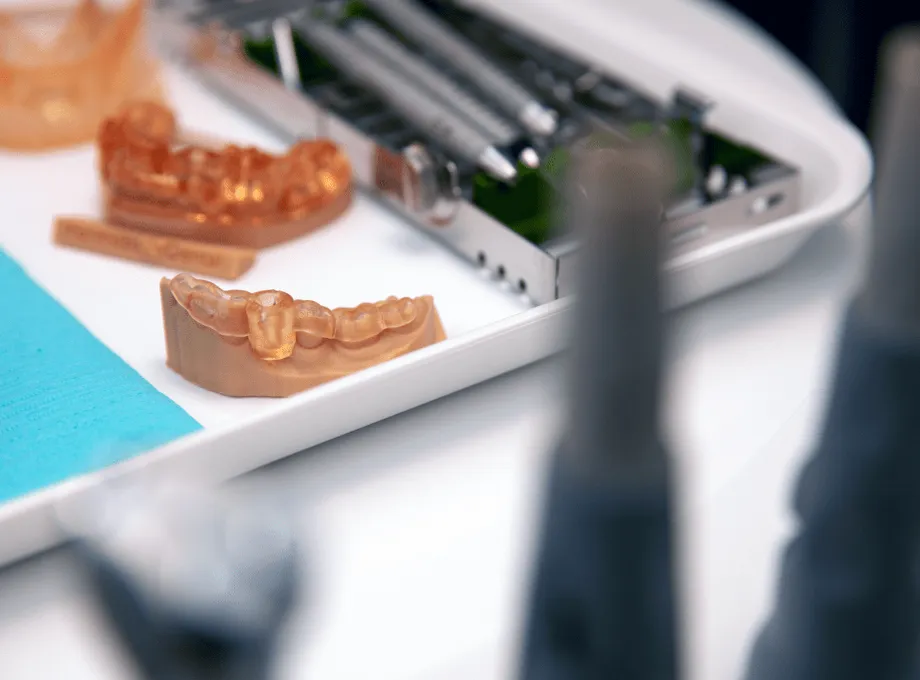
If this is the first surgical guide you send, the order comes down to four things: the CBCT, the intraoral scan, the implant system and your approval of the plan. This protocol is for a practice placing implants that wants the case to arrive complete, without a missing file or a scan that has to be retaken.
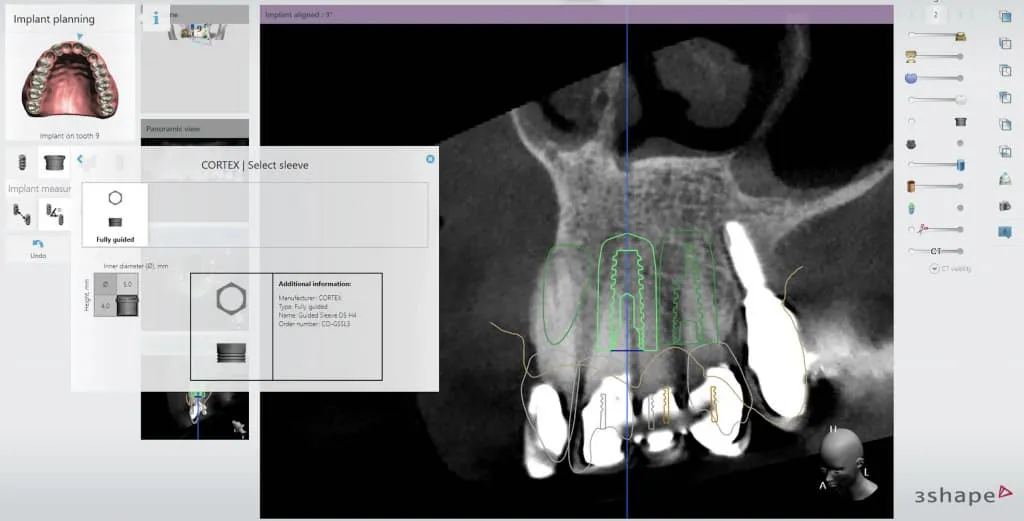
What to send with the first case
The order needs:
- The patient’s CBCT, in the format your unit exports.
- The intraoral scan as STL or PLY. We accept iTero, Medit, 3Shape TRIOS, Carestream, Planmeca and others. If you are not scanning yet, physical models are also accepted.
- The implant system you will place. We work with Nobel Biocare, Straumann, Dentsply Sirona, Zimmer Biomet, MIS and Klockner. Write it on the order: the guide is designed for that brand and that drill kit, not for a generic system.
Without the brand we cannot prepare the drilling protocol that ships with the guide.
How to scan so the guide seats
The guide rests on what you capture. If the seat is incomplete, the design cannot be closed and the scan has to be repeated before planning.
- Scan the full arch, not only the site of the implant.
- Include the soft tissue in the area to be implanted: it is part of the seat when there is no tooth.
- Keep the teeth the guide rests on clean and visible. Blood, saliva or a margin covered by gingiva means the file has to be redone.
When the case continues with the prosthesis, the scan body is captured separately. The steps are in scanning implants with a scan body.
You approve the plan before we print
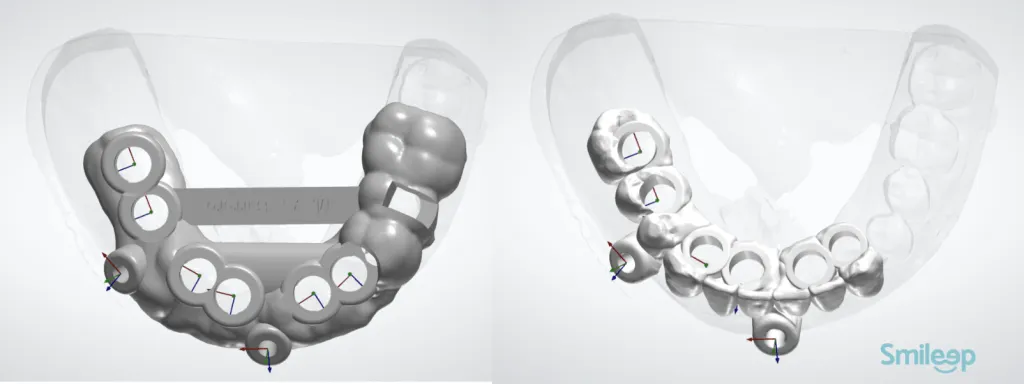
On the CBCT and the scan we plan each implant position: axis, depth and the relation to the tooth or the planned prosthesis. Before manufacturing we send you a planning video. Review it with whoever is operating the case. If an implant needs to move, the angulation needs to change or the seat needs adjusting, we correct it in that review. We do not print the guide until you approve it.
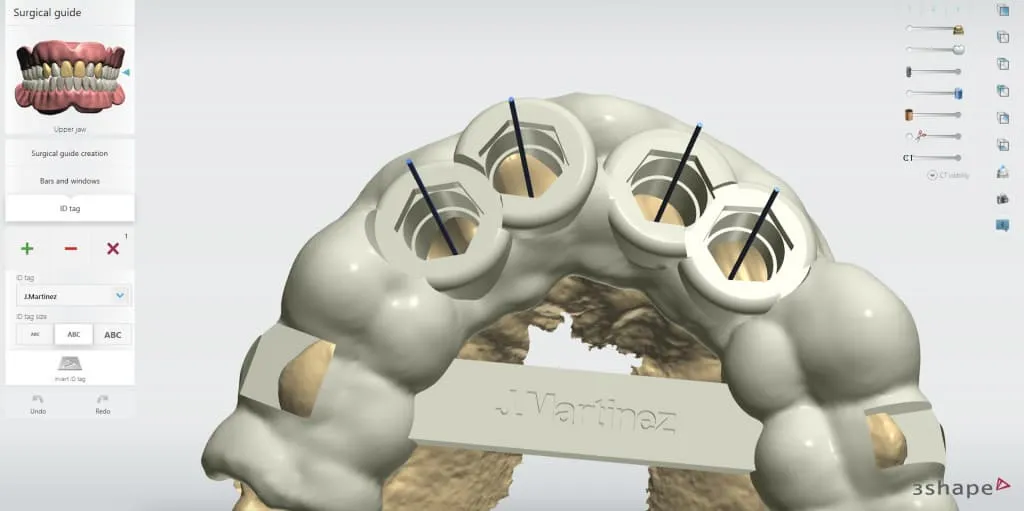
Printing the guide in the lab
The guide is printed in our own lab, on Formlabs 3D printers, in Surgical Guide Resin. It is a biocompatible, Class I, CE-marked resin, meeting ISO 10993, made for surgical guides.
What arrives at the practice
You receive the guide and the surgical report with the drilling protocol for the implant system on the case: the sequence for that brand, not a generic one. A worked example, from CBCT alignment through to the report, is in the guided surgery case.
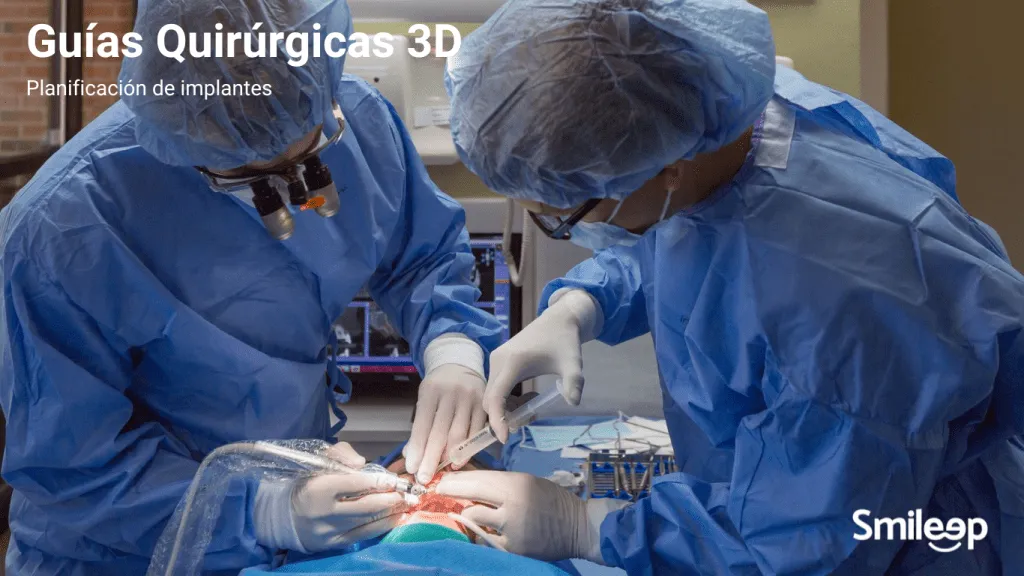
The same case: the prosthesis
Once the implant is placed, the same workflow covers the restoration. From the scan body scan we make the hybrid prosthesis and the screw-retained crowns and bridges for that patient.
When you have the CBCT, the scan and the implant brand, send the case from contact. We check the files before planning starts.